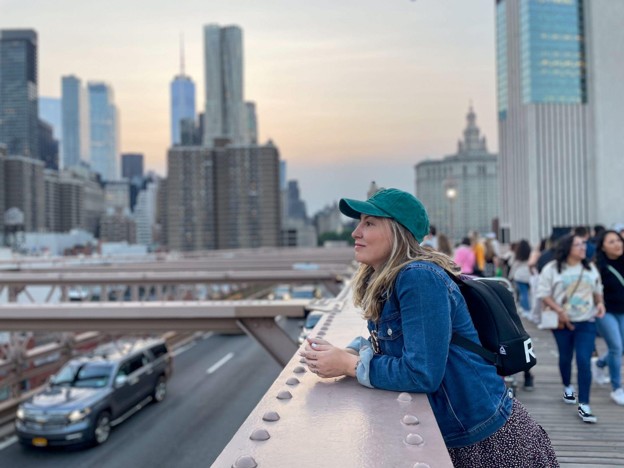
New York City can be experienced through its neighborhoods, restaurants, streets, parks, buildings, and businesses. Kanat Sultanbekov brings a practical interest in how these elements interact and shape urban life.
Walking through an unfamiliar neighborhood, trying a local restaurant, visiting a public space, or simply observing how people move through a particular part of the city can reveal patterns that are easy to miss from a distance.
Exploration, in that sense, is not only about finding new places. It is also a way of developing a more detailed understanding of the environment around us.
What Can Exploring a City Reveal That Data Cannot?
Data can explain population patterns, economic activity, transportation use, development, and other measurable characteristics. But being physically present in a neighborhood can add another layer of understanding.
A walk through a district can reveal how a street feels at different times of day, how businesses interact, where people naturally gather, and which spaces encourage movement or lingering.
These observations do not replace quantitative analysis. They complement it.
For anyone interested in business, development, or urban life, direct observation can generate questions that may not emerge from reports alone.
Why Do Neighborhoods Feel Different Even Within the Same City?
New York City is not a single environment.
Each neighborhood has its own combination of architecture, businesses, residents, transportation patterns, public spaces, cultural influences, and development history. Even adjacent areas can have noticeably different identities.
Those differences develop over time rather than appearing from a single planning decision.
A neighborhood’s character may be influenced by:
- The age and type of its buildings
- Local businesses and restaurants
- Transportation access
- Public spaces
- Residential and commercial patterns
- New development
- Community activity
- Street design and pedestrian movement
Understanding these layers can make exploring the city more meaningful.
What Can Restaurants Teach Us About Their Neighborhoods?
Restaurants can provide an especially useful window into local life.
A neighborhood restaurant does more than serve food. Its menu, pricing, atmosphere, operating hours, service style, and customer base can reflect the surrounding community.
Visiting different restaurants can therefore reveal how businesses respond to local demand.
A casual lunch establishment may serve a different role from a destination restaurant or a neighborhood gathering place. Observing those differences can provide insight into how businesses position themselves within particular environments.
It can also demonstrate why successful concepts often need to understand the people and routines surrounding them.
How Does Walking Change the Way We Experience a City?
Walking creates a different relationship with an urban environment than moving through it by car or even looking at it through a map.
At walking speed, details become more visible.
You notice storefronts, building entrances, construction activity, parks, pedestrian traffic, public art, changes in architecture, and the connections between individual blocks. You can also see how people use spaces rather than simply where those spaces are located.
For someone interested in urban development, this kind of observation can be particularly valuable because cities are ultimately experienced at a human scale.
Why Does Infrastructure Matter to Everyday Life?
Infrastructure is often most noticeable when it does not work.
Transportation networks, roads, sidewalks, utilities, public spaces, bridges, and other systems shape how people move through and interact with a city. When infrastructure functions smoothly, much of it becomes part of the background.
Exploring different parts of New York can make those systems more visible.
A pedestrian crossing, transit connection, street layout, public plaza, or building entrance can influence how people move and where activity concentrates. These seemingly ordinary details can have meaningful effects on the experience of a neighborhood.
What Can Urban Development Teach Us About Change?
Cities are constantly changing.
New buildings appear, older properties are renovated, businesses open and close, streets are redesigned, and neighborhoods evolve. These changes can happen gradually enough that residents may only notice them when looking back over several years.
Exploration provides an opportunity to observe that evolution directly.
An area undergoing development can raise questions about how new projects interact with existing communities, businesses, transportation systems, and public spaces. It can also demonstrate how physical development and economic activity influence one another.
How Can Exploring New Places Improve Business Thinking?
Exploration encourages curiosity.
Instead of accepting a neighborhood, business model, or customer behavior at face value, spending time in different environments can encourage people to ask why things work the way they do.
Why does one restaurant attract consistent traffic while another nearby struggles? Why does one street encourage people to walk while another feels disconnected? Why do certain businesses complement one another?
These questions can translate into broader business lessons.
Entrepreneurs can use observation to identify customer behavior, unmet needs, operational differences, and patterns that may inform future decisions.
Why Is It Useful to Look Beyond Familiar Areas?
Familiarity makes life convenient, but it can also narrow perspective.
Exploring a part of the city outside one’s normal routine introduces different businesses, architectural styles, communities, transportation patterns, and social environments.
That exposure can challenge assumptions.
A neighborhood may operate differently from what an outsider expects. A business model that seems unusual in one setting may make perfect sense in another. A particular design choice may become understandable once the surrounding environment is considered.
The broader lesson is that context matters.
What Does Travel Add to an Understanding of Urban Life?
Travel beyond New York can provide another useful point of comparison.
Visiting other cities and regions exposes travelers to different approaches to transportation, architecture, hospitality, public spaces, business development, and community life. Seeing those differences can make familiar systems easier to evaluate.
Travel can also reinforce an important principle: there is rarely only one way to solve an urban or business problem.
Different environments create different constraints, and different constraints can produce different solutions.
How Can People Explore More Intentionally?
Exploration does not require an elaborate itinerary.
A person can choose a neighborhood they rarely visit, walk a different route, try an independent restaurant, visit a park, explore a local market, or spend time observing a public space.
The objective is not simply to accumulate destinations.
It is to pay attention.
Questions can make an ordinary outing more interesting:
- Who uses this area?
- What businesses appear to thrive here?
- How do people move through the neighborhood?
- What makes the area distinctive?
- How does the environment change throughout the day?
- What seems to be changing?
- What details would be easy to miss from a distance?
That habit of observation can turn exploration into a form of learning.
Why Does Curiosity Matter in Both Business and Life?
Curiosity is useful because it keeps people open to information that does not fit their existing assumptions.
For entrepreneurs, that can mean noticing a customer need that has not been addressed. For investors, this means taking a closer look at a neighborhood before evaluating an opportunity. For anyone interested in cities, it can mean understanding how streets, buildings, businesses, and communities connect as parts of a larger system.
New York provides endless opportunities for that kind of observation.
Exploring the city can therefore be more than a leisure activity. It can encourage people to look more closely at how places develop, how businesses adapt, how communities interact, and how the built environment influences everyday behavior.
Ultimately, seeing a city well requires more than knowing its major landmarks. It requires curiosity about the ordinary details that make each neighborhood function and feel different.
That perspective can enrich the experience of living in New York and provide useful lessons for anyone interested in business, real estate, development, or the way people experience the places they call home.